









Transforming Procurement for Smarter Business Decisions
Kokok Prasetyo, Sourcing and Procurement Division Head, PT Cipta Kridatama
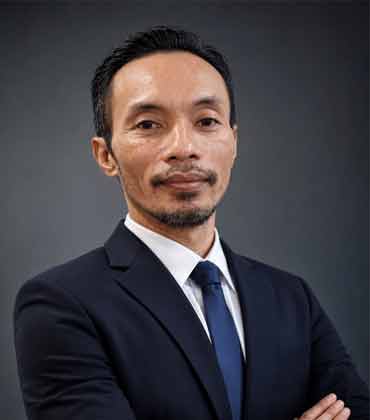
Kokok Prasetyo, Sourcing and Procurement Division Head, PT Cipta Kridatama
For me, procurement automation is not just about making processes faster. The change goes far beyond that. It is reshaping how procurement is perceived within the organization—from a function once associated mainly with administrative work and transactions into one that contributes directly to business decisions. In a complex working environment, especially across multi-site operations and industries that depend heavily on supply chain continuity, this shift is very real.
That shift has also influenced the way I lead. My focus is no longer only on making sure processes are well managed, compliant and efficient. More importantly, I look at how procurement can truly create value. I want the procurement team to be seen as a business partner—helping identify efficiency opportunities, manage supplier risks, strengthen governance and support operational continuity. With automation, the team no longer needs to spend as much time on repetitive manual tasks. That time and energy can be redirected toward more strategic priorities.
In my view, today’s procurement leaders need to be able to connect processes, data and business needs. Strong negotiation and sourcing capability are still important, but they are no longer enough on their own. Procurement leadership now requires a broader business perspective and the ability to translate strategy into meaningful impact.
Benefits and Challenges of AutomationFrom what I have seen in practice, the biggest benefit of procurement automation is not only efficiency, but also control and visibility. When processes are properly digitized, organizations can gain a much clearer view of their spending, monitor workflows more consistently and make decisions based on more accurate data. In large and dispersed operations, this becomes especially important because even a small delay can have a significant impact on operational activities.
Automation also helps strengthen compliance, improve process consistency and make supplier management more measurable. So procurement does not just work faster, it also becomes more transparent and better equipped to support business needs in real time.
Of course, there are challenges. In my experience, the main issue is often not the technology itself, but the organization’s readiness to change. A system may be well designed, but if the underlying processes are not yet structured, the data is not clean or people are not ready to adapt, the outcome will never be optimal. That is why I believe the success of automation depends on the right combination of good process design, strong master data quality and consistent change management. Automation should be treated as a business transformation, not simply as a system implementation.
I believe procurement will always have two dimensions: the analytical side and the human side. Data and automation are extremely helpful because they allow us to work faster, more accurately and more objectively. We can identify spending patterns, monitor supplier performance, read market trends and even detect risks earlier. In many ways, that makes decision-making much stronger.
At the same time, procurement can never be handed over completely to a system. In practice, many important decisions still require judgment, experience and a real understanding of business context.
-
I do not see technology as a replacement for people, but as a tool that allows human contribution to become more focused, more strategic and ultimately more valuable.
For example, when selecting a strategic supplier, managing unusual operational conditions or negotiating in a highly dynamic market, systems can provide recommendations, but people are still the ones who need to understand the broader implications—whether for operations, long-term relationships or overall business risk.
That is why my approach is quite simple: use automation for repetitive work, use data to sharpen analysis and rely on people for the decisions that truly matter. I do not see technology as a replacement for people, but as a tool that allows human contribution to become more focused, more strategic and ultimately more valuable.
Future Trends and Career AdviceLooking ahead, I see procurement moving increasingly toward what I would call connected intelligence—where systems, data and decision-making are all closely linked.
Artificial Intelligence (AI) will become increasingly important in spend analysis, demand forecasting, contract management, supplier risk assessment and predictive decision-making. AI has the potential to transform how procurement organizations identify opportunities and manage risks.
Advanced analytics and predictive intelligence will also play a major role by enabling organizations to anticipate market fluctuations, supply disruptions and supplier performance issues before they occur.
In addition, supplier collaboration platforms will continue to improve transparency across the supply chain by enhancing communication, performance monitoring and compliance management. Organizations are increasingly looking for end-to-end visibility to strengthen resilience and responsiveness.
Another growing area is sustainability and ESG integration. Procurement teams are now expected to assess suppliers not only in terms of cost and quality, but also based on environmental, social and governance performance. Digital tools will help organizations measure and manage these factors more effectively.
Ultimately, the future of procurement will be shaped by intelligent automation, predictive insights, and stronger ecosystem collaboration.
If I reflect on my own journey, one of the biggest lessons I have learned is that successful transformation must always be practical and relevant. A good solution is not the one that looks most sophisticated on paper, but the one that genuinely solves real problems on the ground and can be implemented consistently. I have learned that innovation is important, but discipline in execution, credibility and the ability to build trust are even more critical for long-term success.
I have also become more convinced that procurement transformation is ultimately about people. Technology can accelerate progress, but what truly brings transformation to life is the people behind it—the internal team, stakeholders and suppliers.
My advice to professionals who want to lead this kind of change is simple: do not only become an expert in procurement—become someone who understands the business as a whole. Strengthen your analytical skills, stay open to technology and build strong communication with stakeholders. Because in the end, the procurement leaders of the future will not simply be those who know how to buy well, but those who can connect strategy, people and technology to create long-term value.

