









APAC CIOOutlook
About UsConferencePartner With Us
  • Technologies
    • Blockchain
      Data Intelligence and Management
      Digital Transformation
      FinTech
      Generative and Agentic AI
      Low Code No Code
      Mobile Application
      Networking
      Robotics
      Storage
      Wireless
  • Industries
    • Automotive
      Aviation
      Banking
      Construction
      E-Commerce
      Food and Beverages
      Healthcare
      Insurance
      Logistics
      Manufacturing
      Retail
      Supply Chain
      Travel and Hospitality
  • Platforms
    • Microsoft
      Salesforce
      SAP
  • Strategic Solutions
    • Business Intelligence
      Contact Center
      Corporate Finance
      CRM
      Cyber Security
      Data Center
      Enterprise Asset Management
      Enterprise Performance Management
      IT Infrastructure and Services
      Managed Services
      Procurement
      Unified Communication
      Workflow
  • Home
  • CXO Insights
  • Leadership Perspectives
  • Innovation Insights
  • Research
  • News
  • Whitepapers
  • CXO Awards
#

Apac CIOOutlook Weekly Brief

×

Be first to read the latest tech news, Industry Leader's Insights, and CIO interviews of medium and large enterprises exclusively from Apac CIOOutlook

Subscribe

loading

THANK YOU FOR SUBSCRIBING

  • Home
  • Procurement
Editor's Pick (1 - 4 of 8)
left
Reshaping Transportation Mobility With Simplified Services

Kirk Serjeantson, CIO, Dicom Transportation Group

How to Attract Next Generation IT Talent

John Burke, CIO, Ambit Energy

Big Data: The Catalyst of Digital Transformation

Mona Badie, CIO & CDO, GE Hitachi Nuclear Energy

Use of Big Data Analytics in Supply Chain

Pankaj Bhargava, CIO, Pidilite

The Strategic Value of Strong Supplier Relationships

Lawrence Pepito, National Procurement Manager, General Milling Corporation

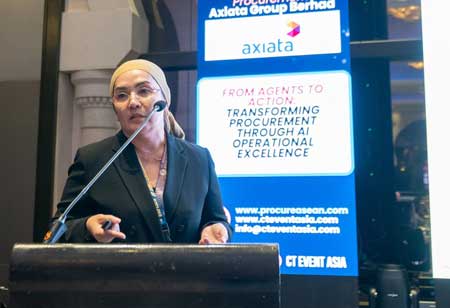
How Agentic AI is Transforming Procurement

Siti Morni Jalil, Head of Group Strategic Sourcing & Corporate Center Procurement, Axiata Group Berhad

Sourcing Advantage Is Built Between Functions

Emmet Poon, Head of Global Sourcing & procurement, King Living

Transforming Procurement for Smarter Business Decisions

Kokok Prasetyo, Sourcing and Procurement Division Head, PT Cipta Kridatama

right

Market Trends Spur Change in Supply Chains, Need for Better Technology

Monica Wooden, Co-Founder & CEO, MercuryGate International, Inc.

Tweet
content-image

Monica Wooden, Co-Founder & CEO, MercuryGate International, Inc.

The transportation and logistics industries touch every aspect of daily life–from the medicines needed to treat illness to the food being served for tonight’s dinner. Therefore, there is a direct tie between market dynamics and supply chain strategy. Three trends that are affecting supply chains today are e-commerce, transportation supply not meeting and demand due to current economic conditions, and a volatile global environment. All are very real challenges, and they are pushing supply chain managers to embrace new strategies and the technologies that support them.

E-commerce is growing at double digit rates

E-commerce continues to experience strong growth. In 2017, e-commerce grew 15.5 percent year-over-year, compared with retail growth of 4.9

percent, according to a report by the U.S. Census Bureau. The report is on an adjusted basis and was cited in a recent research paper issued by A.T. Kearney.

The advent of companies offering next-day or even next-hour home deliveries is also changing the dynamics of the supply chain. As companies look for ways to address last-mile deliveries, often the most costly and most challenging in the supply chain, demand for parcel delivery continues to be strong.

With these growing concerns, many shippers are recognizing that technology is a critical component in supporting these demands. A transportation management system (TMS) can help logistics managers handle e-commerce in a number of ways. By offering visibility at the SKU level and across the supply chain, a TMS can make sure that the shipment is on track from the first mile to the last mile. And, a TMS with parcel capabilities as a native part of its architecture allows more efficient management of parcel shipping as well as opportunities for optimization to other modes, like less-than-truckload (LTL).

Demand exceeds supply in transportation

According to a recent study by A.T. Kearney, demand exceeds supply in every transportation sector.

A tms with global capabilities is a must-have for international transportation management today

And, the most significant capacity shortages appear to be in the trucking industry. There are number of reasons for capacity to be tight, including a nationwide truck driver shortage.

At the end of 2017, the American Trucking Association (ATA) stated that there was a deficit of 50,000 drivers. While carriers are experiencing the ability to shore up margins that have been razor thin, they are challenged to make the most of every asset. While truck driver Hours-of-Service regulations have always been strict, the mandated for electronic logging devices (ELDs) means there is no wiggle room at all.

With the ATA estimating that close to 70 percent of all goods consumed in the U.S. move by truck at some point in the supply chain, the capacity shortage is having an effect on numerous industries. Across the board, shippers that are looking to control logistics costs need creative thinking and innovation to optimize their networks. A TMS can assist shippers in driving optimization across their networks, while also identifying gaps and opportunities for increased efficiency. Using a TMS with business intelligence (BI) capabilities can help shippers make more informed decisions because they can easily pinpoint what lanes, routes, customers, or divisions drive costs up, and then look for ways to improve performance in those areas.

Global trade environment is volatile

With numerous proposed and changing regulations regarding tariffs, trading partners, and virtually every aspect of global trade, the environment can best be described as volatile. Global transportation management involves a level of complexity beyond regulatory issues, with the need to operate in different currencies, languages, and units of measure.

A disruption with a global shipment can have significant impacts and take longer to resolve than a domestic issue. For example, additional trucks can be dispatched to cover a missed pickup in minutes or hours. However, missing a berth on a steamship can delay your shipment by weeks. And, if the shipment is trapped on a container at a port, it is very difficult to retrieve the freight to move it to an expedited or air cargo service.

A TMS with global capabilities is a must-have for international transportation management today. With data being received from numerous sources, companies need the ability to access and integrate information and to gain visibility across the supply chain, a daunting task if a manager is relying on phones, faxes, and email to handle transactions.

In conclusion, there has never been a more exciting time to be in the transportation and logistics industries or a more critical time for all parties engaged in the supply chain to be creative, innovative, and strategic. It is time to put away the Excel charts and fully embrace technologies like a TMS. Even if a company makes the initial investment to address a current issue, they will also continue to be well positioned for all of the opportunities and challenges of what is shaping up to be a dynamic future of delivery.

Weekly Brief

loading
Top 5 Procurement Services Companies in Australia - 2023
Top 5 Procurement Services Companies in Indonesia – 2023
Featured Issue

I agree We use cookies on this website to enhance your user experience. By clicking any link on this page you are giving your consent for us to set cookies. More info

APAC CIOOutlook
Follow on LinkedIn

About

  • Home
  • About Us
  • Partner With Us

Stay Connected

  • Subscribe
  • Newsletter
  • Sitemap

Contact Us

  • editor@apacciooutlook.com
  • sales@apacciooutlook.com
  • marketing@apacciooutlook.com

Legal

  • Editorial Policy
  • Privacy Policy
  • Terms of Use

© 2026 APAC CIOOutlook. All rights reserved.

This content is copyright protected

However, if you would like to share the information in this article, you may use the link below:

https://procurement.apacciooutlook.com/cxoinsights/market-trends-spur-change-in-supply-chains-need-for-better-technology-nwid-6622.html