










APAC CIOOutlook
About UsConferencePartner With Us
  • Technologies
    • Blockchain
      Data Intelligence and Management
      Digital Transformation
      FinTech
      Generative and Agentic AI
      Low Code No Code
      Mobile Application
      Networking
      Robotics
      Storage
      Wireless
  • Industries
    • Automotive
      Aviation
      Banking
      Construction
      E-Commerce
      Food and Beverages
      Healthcare
      Insurance
      Logistics
      Manufacturing
      Retail
      Supply Chain
      Travel and Hospitality
  • Platforms
    • Microsoft
      Salesforce
      SAP
  • Strategic Solutions
    • Business Intelligence
      Contact Center
      Corporate Finance
      CRM
      Cyber Security
      Data Center
      Enterprise Asset Management
      Enterprise Performance Management
      IT Infrastructure and Services
      Managed Services
      Procurement
      Unified Communication
      Workflow
  • Home
  • CXO Insights
  • Leadership Perspectives
  • Innovation Insights
  • Research
  • News
  • Whitepapers
  • CXO Awards
#

Apac CIOOutlook Weekly Brief

×

Be first to read the latest tech news, Industry Leader's Insights, and CIO interviews of medium and large enterprises exclusively from Apac CIOOutlook

Subscribe

loading

THANK YOU FOR SUBSCRIBING

  • Home
  • Procurement
Editor's Pick (1 - 4 of 8)
left
Reshaping Transportation Mobility With Simplified Services

Kirk Serjeantson, CIO, Dicom Transportation Group

Big Data: The Catalyst of Digital Transformation

Mona Badie, CIO & CDO, GE Hitachi Nuclear Energy

Use of Big Data Analytics in Supply Chain

Pankaj Bhargava, CIO, Pidilite

The Strategic Value of Strong Supplier Relationships

Lawrence Pepito, National Procurement Manager, General Milling Corporation

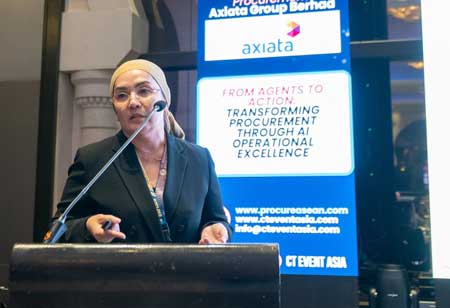
How Agentic AI is Transforming Procurement

Siti Morni Jalil, Head of Group Strategic Sourcing & Corporate Center Procurement, Axiata Group Berhad

Sourcing Advantage Is Built Between Functions

Emmet Poon, Head of Global Sourcing & procurement, King Living

Transforming Procurement for Smarter Business Decisions

Kokok Prasetyo, Sourcing and Procurement Division Head, PT Cipta Kridatama

Elevating Field Services through Technology

Alain Bienfait, Vice President Global Escalator Business, KONE

right

How to Attract Next Generation IT Talent

John Burke, CIO, Ambit Energy

Tweet
content-image

John Burke, CIO, Ambit Energy

The energy sector is facing a new reality in which outdated, legacy technology systems are not able to keep up with current organizational needs. In order to evolve and survive in today’s market, energy and utility providers need a strong IT team.

With the prevalence and importance of corporate digital transformations, the energy industry must continue to innovate. However, in order to do so, attracting capable IT talent is paramount for success.

Nearly all of the Fortune 2000 companies have embarked on a digital transformation journey, but up to more than 80 percent have not been successful. Despite the challenges, digital transformation must be a priority for companies to remain relevant in the marketplace. However, rather than overhauling legacy systems every decade, it should be a continual process that involves the IT team as a central factor in improving the company. Digital transformation is at the heart of companies hoping to attract and retain IT talent.

Unfortunately, the energy industry faces an uphill battle in acquiring and maintaining the IT experts needed to successfully transform IT departments. From attractive technology destinations, such as Apple and Google, to the seemingly constant formation of start-up companies across the country, the energy industry faces a perception problem.

As we know, energy is the foundation for modern life, but working in the industry is often viewed as a place lacking the opportunity for innovation, challenges and a desirable work environment—primarily from millennials that comprise the majority of tactical-level IT talent in the market. In order to build successful IT departments, the energy industry must address these three potential issues.

The Importance of Innovation

One of the primary drivers in the careers of IT professionals is the opportunity to work on the cutting edge of technology. By undergoing a digital transformation, not only can energy companies help modernize legacy systems to improve performance and functionality, but companies can also serve as an attractive place to build and grow a career.

Traditional main frames and AS 400s do not perform at the same level of current offerings. Legacy systems reflect traditional organizations, which does not attract IT talent. Companies should continuously renovate their systems to improve back-office offerings that are essential for the customer experience.

IT leadership must remember that it is not how you fit people into your mold but how you work around their talent

This is also a cyclical process. By making digital transformation a priority throughout the organization, energy companies can attract better IT talent, which will also enable them to continue to stay at the forefront of current trends that will enhance operations and improve performance.

A successful IT team can adapt and evolve legacy systems. When companies progress with technology, they are allowing their IT talent to develop and evolve as well. In turn, current and potential employees will view the opportunity to work with the latest technology as a selling point when they are in search for a place to start or continue their career.

Challenging Your Talent

Employees want to feel challenged by their leaders and millennials specifically are interested in having a purpose within the company. It is not enough to just provide a directive of a department embracing digital transformation.

Millennials are also interested in leadership that allows them to be part of the solution rather than just focusing on corporate ladder. In fact, the Kaufman Foundation’s research shows that 54 percent of millennials want to start their own business and want to be a part of a company that can help them get there. They are focused on developing themselves within the workplace and thrive in environments where they can learn new skill sets every day.

One of the primary reasons IT talent leaves for a new job is because they aren’t receiving mentorship and challenges that lead to personal growth. The Bureau of Labor Statistics notes that workers 55-64 years old have an average tenure of nearly three times those ages 25-34. IT leadership must create an environment that makes ‘success’ achievable so employees feel they are making a difference.

Creating a Work Environment Tailored to Talent

When options include tech companies and start-ups, energy companies can struggle to attract IT talent without providing a desirable work environment that is laid back and tailored to their strengths. While digital transformation requires an investment from leadership, this can truly be the biggest hurdle in attracting and retaining IT talent for energy companies who often have a traditional work environment.

IT leadership must remember that it is not how you fit people into your mold but how you work around their talent. By having the IT department adopt this type of philosophy, they allow talent to be creative and deliver results that helps the company and themselves.

According to a Bentley University survey, 77 percent of millennials say flexible hours make the workplace more productive. This means, don’t have your IT team punching a time card. Millennials need flexibility, which includes the opportunity to work non-traditional hours or work remotely. They also expect to be treated fairly by their managers with performance-based appraisals. As always, the team will have responsibilities and be subject to quality measures, but by being flexible, the team will often achieve better results.

Many energy companies will undoubtedly view this as a risk, but as more and more employers tailor their approach to their employees, flexibility and fairness are crucial in attracting the best IT talent. Soon this will not be viewed as a differentiator in the competitive hiring market but rather table stakes.

Making Your Way to the New Talent

The energy sector is going through a lot of exciting changes, but if companies want to keep up with the competition, attracting the right talent should be a priority.

Through digital transformation, personally challenging your employees and creating a culture of flexibility and fairness, energy companies and IT departments will appeal to the IT talent they need to help benefit their company and the industry.

tag

Customer Experience

Weekly Brief

loading
Top 5 Procurement Services Companies in Australia - 2023
Top 5 Procurement Services Companies in Indonesia – 2023
Featured Issue

I agree We use cookies on this website to enhance your user experience. By clicking any link on this page you are giving your consent for us to set cookies. More info

APAC CIOOutlook
Follow on LinkedIn

About

  • Home
  • About Us
  • Partner With Us

Stay Connected

  • Subscribe
  • Newsletter
  • Sitemap

Contact Us

  • editor@apacciooutlook.com
  • sales@apacciooutlook.com
  • marketing@apacciooutlook.com

Legal

  • Editorial Policy
  • Privacy Policy
  • Terms of Use

© 2026 APAC CIOOutlook. All rights reserved. Headquarteblue in Fort Lauderdale, FL, USA.

This content is copyright protected

However, if you would like to share the information in this article, you may use the link below:

https://procurement.apacciooutlook.com/ciospeaks/how-to-attract-next-generation-it-talent-nwid-5422.html